How to Pronounce
BdelliumDEHL-yoom
Hear the pronunciation of Bdellium
Click to play audio
Recommended Reading

How to Read the Bible for All Its Worth
Gordon Fee & Douglas Stuart
View on Amazon →
Grasping God's Word
J. Scott Duvall & J. Daniel Hays
View on Amazon →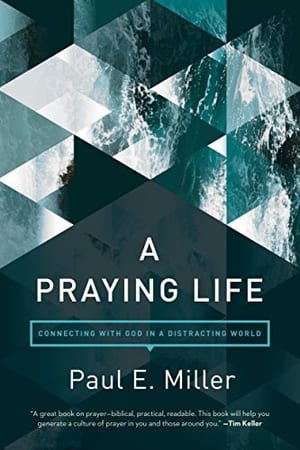
A Praying Life
Paul E. Miller
View on Amazon →
Women of the Word
Jen Wilkin
View on Amazon →
The Bible Recap
Tara-Leigh Cobble
View on Amazon →As an Amazon Associate we earn from qualifying purchases.
Pronunciation Video
Watch on YouTube →Historical Context
Bdellium: The Fragrant Resin of Scripture
The key to pronouncing bdellium correctly—DEL-ee-um—is knowing that the opening "b" is completely silent. This unusual spelling trips up nearly every reader who encounters it for the first time, making bdellium one of the most universally mispronounced words in the Bible.
Etymology and Meaning
The word comes into English through the Latin bdellium, derived from the Greek bdéllion, itself borrowed from a Semitic source—possibly the Hebrew bedolach (בְּדֹלַח). The precise meaning is uncertain. Ancient sources were divided: some described bdellium as a fragrant gum resin similar to myrrh, harvested from trees in Arabia, Persia, or India. Others treated it as a precious stone or crystal. The Septuagint translates it as "anthrax" (a gemstone) in Genesis 2:12 but as a resinous substance in other contexts, reflecting genuine uncertainty among ancient scholars about what the Hebrew word denoted.
Biblical Context
Bdellium appears twice in the Hebrew Bible. Genesis 2:12 mentions it in the description of the land of Havilah near the garden of Eden: "The gold of that land is good; bdellium and onyx stone are there." Whether bdellium is grouped here as a precious stone alongside onyx, or as a valued resin in a land of rare commodities, the verse establishes it as something of exceptional worth.
The second occurrence is Numbers 11:7, where Israel's manna is compared to bdellium in appearance: "Now the manna was like coriander seed, and its appearance like that of bdellium." Here bdellium seems to indicate a translucent, pale, or white-colored substance—its visual quality being the point of comparison. This usage has led many scholars to favor the gemstone or crystal interpretation. Josephus described bdellium as resembling the color of frankincense. The ambiguity has never been fully resolved by modern scholarship.
Pronunciation Guide
The initial "b" in bdellium is entirely silent—a relic of its Greek origin where "bd-" was a pronounceable consonant cluster but became silent in Latin and English. The correct pronunciation is DEL-ee-um: three syllables, stress on the first. "DEL" rhymes with "bell," "ee" is a brief unstressed vowel, and "um" is the standard English suffix. The overwhelming majority of readers attempt "buh-DEL-ee-um" on first sight. Simply ignore the "b" entirely: DEL-ee-um.
How to Read, Study & Pray
How to Read the Bible for All Its Worth
Gordon Fee & Douglas Stuart
View on Amazon →Grasping God's Word
J. Scott Duvall & J. Daniel Hays
View on Amazon →A Praying Life
Paul E. Miller
View on Amazon →Women of the Word
Jen Wilkin
View on Amazon →The Bible Recap
Tara-Leigh Cobble
View on Amazon →As an Amazon Associate we earn from qualifying purchases.