
How to Pronounce
Abishaiuh-BIHSH-ay-ai
Hear the pronunciation of Abishai
Click to play audio
Old Testament Reading

The Unfolding Mystery
Edmund P. Clowney
View on Amazon →
According to Plan
Graeme Goldsworthy
View on Amazon →
Introducing the Old Testament
Tremper Longman III
View on Amazon →
God's Big Picture
Vaughan Roberts
View on Amazon →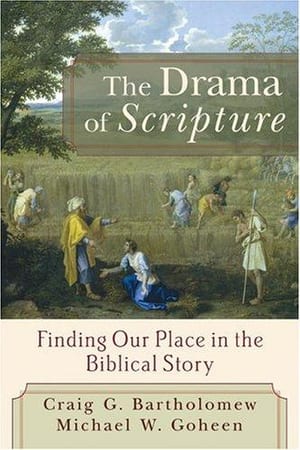
The Drama of Scripture
Bartholomew & Goheen
View on Amazon →As an Amazon Associate we earn from qualifying purchases.
Pronunciation Video
Watch on YouTube →Meaning
the present of my father
Historical Context
Abishai: Father's Gift in David's Inner Circle
Abishai (uh-BIHSH-ay-ai) carries a meaning rooted in Hebrew: "my father is a gift" or "the present of my father." The name breaks down into two elements—ab (father) and shai (gift)—reflecting a common naming convention among ancient Israelites that acknowledged God's provision and blessing.
Who Was Abishai in Scripture?
Abishai appears throughout the historical books of 1 and 2 Samuel and 1 Chronicles as one of King David's most trusted military commanders. He was the brother of Joab and Asahel, sons of Zeruiah, David's sister. Understanding how to pronounce Abishai correctly helps readers follow his significant role in David's rise to power and his reign over Israel.
The biblical record shows Abishai as a fierce warrior and loyal supporter. In 1 Samuel 26, he accompanied David to Saul's camp and urged David to kill the sleeping king—a moment that reveals both his devotion and his military boldness. Later, pronouncing Abishai's name becomes essential as readers encounter him commanding troops and executing David's will in ways that sometimes crossed ethical lines.
His Role in David's Army
Abishai served as a general under Joab's command and led David's forces in multiple campaigns. In 2 Samuel 10, he commanded one division against the Ammonites and their Syrian allies. His courage was legendary—he once killed 300 men in a single battle (2 Samuel 23:18).
Yet Abishai's legacy is complicated. While his loyalty to David never wavered, his willingness to act without restraint sometimes brought David into morally questionable territory. When David's enemies fell, Abishai was often the instrument of that downfall.
Why Abishai Matters Today
For Bible readers and teachers, learning the correct Abishai pronunciation opens doors to understanding David's court dynamics. His character illustrates the tension between military necessity and moral restraint, between loyalty and justice. Abishai reminds us that biblical heroes were complex figures navigating power, duty, and conscience in ways that still resonate with modern readers wrestling with similar questions.
How to Read, Study & Pray

How to Read the Bible for All Its Worth
Gordon Fee & Douglas Stuart
View on Amazon →
Grasping God's Word
J. Scott Duvall & J. Daniel Hays
View on Amazon →
A Praying Life
Paul E. Miller
View on Amazon →
Women of the Word
Jen Wilkin
View on Amazon →
The Bible Recap
Tara-Leigh Cobble
View on Amazon →As an Amazon Associate we earn from qualifying purchases.
